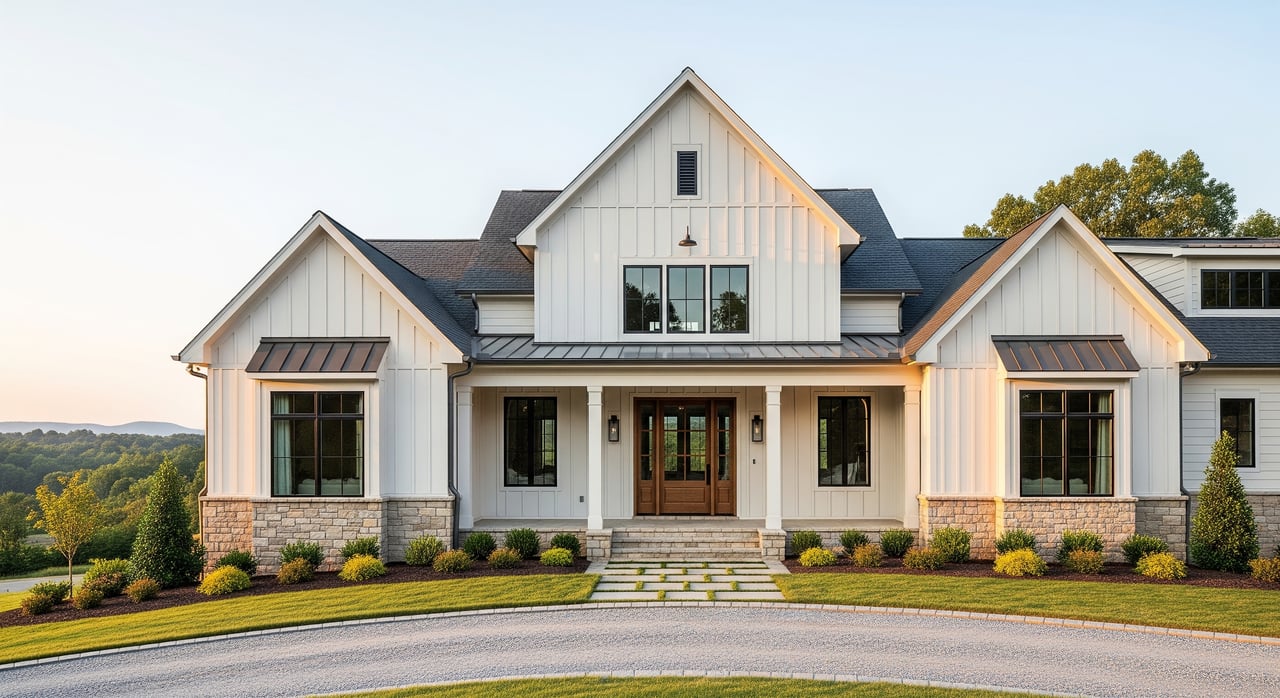
Wish your first two years of payments on a new East Brainerd home felt lighter? You are not alone. Many Hamilton County buyers are looking at 2‑1 buydowns to create short‑term relief while they settle in. In this guide, you will learn how a 2‑1 buydown works, what to confirm with builders and lenders, a real payment example, and how to decide if it is the right move for your new construction. Let’s dive in.
What is a 2‑1 buydown?
A 2‑1 buydown is a temporary interest‑rate subsidy. Your effective rate is reduced by 2 percentage points in year 1 and by 1 percentage point in year 2. Starting in year 3, your payment resets to the permanent rate on your loan.
Builders, sellers, or lenders typically fund the subsidy up front. The funds go into a special escrow account. Each month during the first 24 months, the lender uses that money so you pay a lower amount. After month 24, the subsidy ends and you pay the regular note payment.
How the subsidy is paid
- The subsidy is the difference between the lower temporary payment and the full payment at your note rate.
- The payor (often the builder) deposits that total amount at closing into a buydown escrow account.
- The lender applies the escrowed funds each month during the buydown period, so you see lower payments in years 1 and 2.
Why builders offer them in East Brainerd
- They make early payments feel more affordable and can help homes move faster.
- The upfront subsidy can be cheaper for a builder than dropping the sales price.
- In East Brainerd, where national and regional builders both operate, incentives often reflect broader Chattanooga trends and can shift with inventory, interest rates, and seasonality.
Example: your payment with a 2‑1 buydown
Here is a simple illustration to show how the math works. This is only an example. Your numbers will vary based on your loan amount, program, and final rate.
- Loan amount: $400,000
- Loan term: 30‑year fixed
- Permanent note rate: 6.50%
- 2‑1 buydown: Year 1 at 4.50%, Year 2 at 5.50%, Year 3+ at 6.50%
Calculated monthly principal and interest (no taxes, insurance, HOA, or mortgage insurance):
- Year 1 (4.50%): $2,028 per month
- Year 2 (5.50%): $2,271 per month
- Year 3+ (6.50%): $2,529 per month
Your monthly savings vs the permanent rate:
- Year 1: about $501 per month (about $6,012 in year 1)
- Year 2: about $258 per month (about $3,092 in year 2)
Total subsidy needed to fund the buydown over 24 months is about $9,100. That is the typical one‑time amount a builder would provide to create the lower payments in this example.
What the builder might pay
In this scenario, the builder deposits roughly $9.1k at closing. You get two years of reduced payments while the lender draws from the escrow. The credit can show as a specific buydown line item or as a broader seller credit. It can also be baked into pricing, so ask for a clear breakdown.
Buydown vs price reduction or closing costs
A 2‑1 buydown is one of several ways a builder can help with affordability. You should compare it to the value of a price reduction or a closing cost credit.
Consider the following when you compare:
- Time horizon. If you plan to stay long term, a price reduction lowers your payment for 30 years. A 2‑1 buydown is temporary.
- Cash at closing. If you need help with upfront costs, a closing cost credit could be more useful than a temporary payment reduction.
- Payment comfort. If your first two years are tight due to moving costs or an expected income ramp, a 2‑1 buydown can ease that period.
- Net price. Ask whether the incentive is built into the home price. Look at the net effect of each option.
Pros and cons to consider
Benefits
- Lower monthly payments for the first 24 months.
- May be offered at no direct cost to you if the builder pays.
- Helpful if you expect income growth or plan to refinance or sell within a few years.
Risks and trade‑offs
- Payment shock in year 3 when the payment resets to the full note rate. Budget for it now.
- Qualification may still be at the permanent rate. Many lenders underwrite at the note rate to ensure you can afford the payment after the buydown ends.
- Hidden pricing. Some credits are offset by higher base prices or fewer upgrade concessions. Always compare net numbers.
- Refinance risk. If you refinance or pay off early, some or all of the unused subsidy may not be applied. Ask the lender how early payoff impacts the buydown funds.
- APR impact. The buydown affects how costs show on your Loan Estimate and Closing Disclosure. Review the disclosures carefully.
Rules, underwriting, and timing
Before you rely on a 2‑1 buydown to qualify or to hit a target payment, confirm these details with your lender and the builder:
- Qualification rate. Many lenders qualify you at the permanent note rate or a stated qualifying rate. Do not assume you will qualify at the reduced year‑1 payment.
- Program limits. Conventional, FHA, VA, and USDA loans have rules for seller or lender contributions and temporary buydowns. Confirm what is allowed for your program.
- Escrow handling. The buydown funds are usually deposited up front and held in a separate escrow account that the lender manages.
- APR and disclosures. The buydown should be reflected on your Loan Estimate and Closing Disclosure. Ask how the APR will appear.
- Rate locks and preferred lenders. Some builder offers require using a preferred lender and may be tied to a specific lock window. Confirm whether the offer is guaranteed at contract or only at rate lock.
Questions to ask before you sign
Questions for the builder or sales rep
- Are you offering a 2‑1 buydown on this home? What is the exact dollar amount?
- Who is paying the buydown funds and how will it appear in the contract?
- Is the buydown built into the list price or provided as a separate credit at closing?
- Do I need to use your preferred lender or title company to receive it?
- If the home is not yet finished, is the offer locked now or subject to change at rate lock?
Questions for the lender or mortgage officer
- Will you qualify me at the reduced buydown payment or at the permanent note rate? Which guideline controls that?
- How will the buydown funds be held and applied? Will they be in a separate trust account or shown as a seller credit?
- How will the buydown affect my APR and how will it be shown on my Loan Estimate and Closing Disclosure?
- What are the seller or lender contribution limits for my loan program?
- What happens to any unused buydown funds if I refinance or pay off the loan early?
Smart next steps in East Brainerd
- Get a written incentive sheet that spells out the buydown dollar amount and any conditions.
- Run your year‑3 payment and build your budget around that full amount.
- Ask your lender about early refinance rules and whether unused buydown funds are applied, returned, or forfeited.
- Compare the 2‑1 buydown to a straight price reduction and a closing cost credit. Use net numbers, not just headlines.
- Confirm timing if the home is still under construction. Make sure the rate lock and incentive windows match your delivery date.
- Partner with a local team that knows new construction and builder incentives in Hamilton County.
If you want a clear, side‑by‑side comparison for a specific East Brainerd home, we are here to help you weigh the options and negotiate the best structure for your budget and timeline. Reach out to Jooma Homes LLC to review current builder incentives, run custom payment scenarios, and secure a plan that fits your first two years and beyond.
FAQs
What is a 2‑1 buydown on a new East Brainerd build?
- It is a temporary subsidy that lowers your interest rate by 2 percentage points in year 1 and 1 percentage point in year 2, then reverts to the permanent rate in year 3.
How much does a 2‑1 buydown typically cost a builder?
- Using a $400,000 loan at a 6.50% note rate, the total 24‑month subsidy is about $9,100, though your loan size and rate will change this amount.
Will a 2‑1 buydown help me qualify for the mortgage?
- Often no, since many lenders underwrite at the permanent note rate or a stated qualifying rate; ask your lender how they will qualify your loan.
What happens to buydown funds if I refinance early?
- Policies vary by lender; ask how unused escrowed funds are handled if you refinance or pay off the loan before the 24 months end.
Are 2‑1 buydowns allowed on FHA, VA, or USDA loans?
- Many programs allow temporary buydowns with limits on seller or lender contributions; confirm the current rules for your specific loan type.
