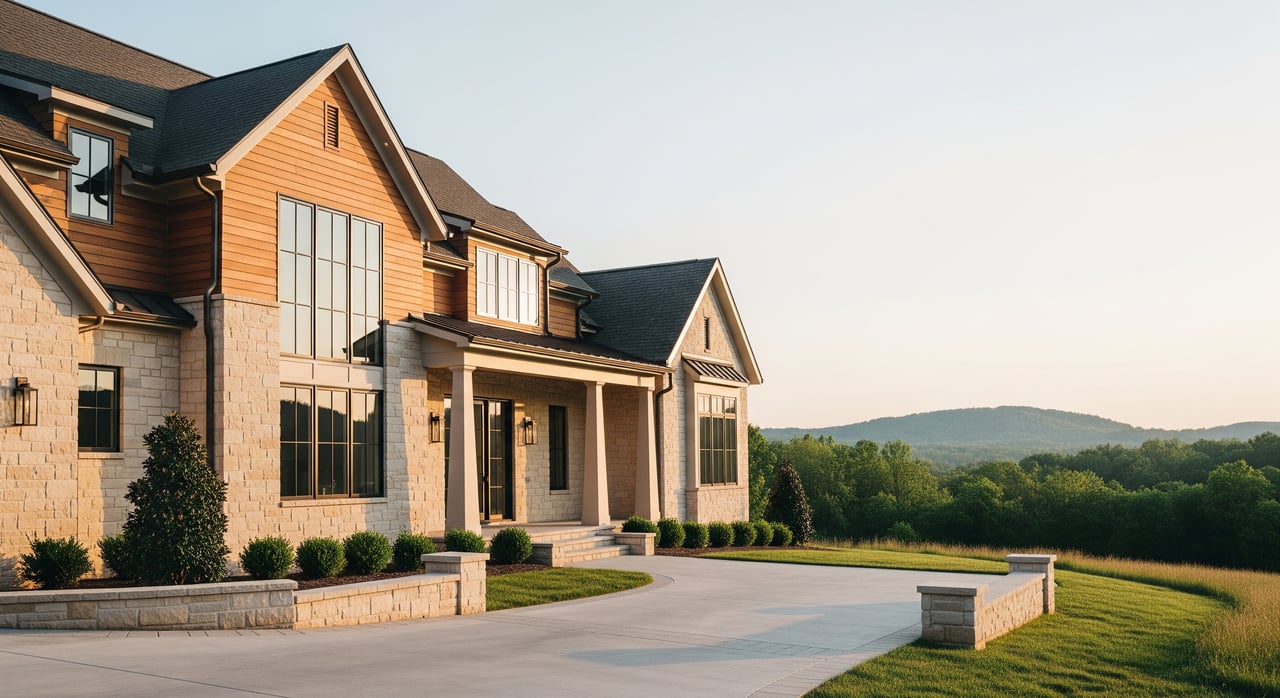
Thinking about building in Ooltewah instead of buying resale? You are not alone. Many move-up buyers and relocating families want smart design, efficient systems, and the peace of mind that comes with a new-build warranty. This roadmap breaks down each step in plain language, highlights local factors that matter in Hamilton County, and gives you practical checklists to keep your project on time and on budget. Let’s dive in.
The Ooltewah new-build path
Stage 1: Pre-purchase planning
Before you fall in love with a floor plan, lock in your numbers. Outline your budget, talk with a lender about new-construction financing, and set a realistic contingency. Start touring neighborhoods and lots in Ooltewah and nearby communities. Pay attention to commute routes to Chattanooga, lot topography, and how subdivisions handle utilities and amenities.
Create a short list of builders that match your timeline and design goals. Decide whether you want a production plan with defined options, a semi-custom path with more flexibility, or a fully custom design. If you already own a lot, your planning should also include early site research and utilities.
Stage 2: Contract and design selection
Once you choose a lot and builder, you will sign a purchase agreement that sets the base price, allowances, timeline targets, and change-order rules. Review what is included in the base price and what counts as an upgrade. Finalize your plan, structural options, and design selections as early as possible. Clear decisions now prevent delays later.
Stage 3: Pre-construction and permitting
Expect site surveys, soils or geotechnical checks if the lot is sloped, and verification of utility availability. Your builder typically secures required Hamilton County permits or the appropriate municipal permits if your lot sits inside an incorporated area. If the lot needs a septic system, the health department must approve a perc test and septic design. HOA approvals may be required for exterior materials, fencing, and landscaping.
Stage 4: Site work and foundation
Grading, drainage planning, utility taps, and erosion control happen first. Foundation work follows, which can vary with Ooltewah’s rolling terrain. Steeper lots or clay soils may require additional engineering or deeper footings, which affect cost and schedule.
Stage 5: Structure and systems rough-in
Framing and roofing come together, then mechanical, plumbing, and electrical rough-ins. Inspections occur at key points to confirm code compliance. Good communication with your builder during this phase keeps selections and delivery dates aligned.
Stage 6: Interior finishes and inspections
Insulation, drywall, trim, cabinetry, flooring, paint, and fixtures complete the interior. You may have a pre-drywall walkthrough to confirm outlet locations and framing details. Your builder coordinates inspections leading up to the final sign-off.
Stage 7: Final walkthrough and closing
Before closing, you will complete a detailed walkthrough and create a punch list. The home must receive a Certificate of Occupancy, which signals code compliance. Your lender will coordinate any final draw or conversion to permanent financing.
Stage 8: Post-close care and warranty
Most builders provide written warranty terms. Many follow a 1-year workmanship, 2-year systems, and 10-year structural framework. Keep a simple maintenance calendar to protect finishes and systems in East Tennessee’s humid climate.
Choosing the right lot in Ooltewah
Subdivision vs rural lot
- Subdivisions often include roads, sidewalks, and sewer with an HOA, which can simplify utility connections.
- Rural lots may require septic design and permits, driveway permits, and more extensive site preparation.
Topography and orientation
- Many Ooltewah-area lots have rolling terrain. Slope affects excavation, drainage, foundation design, and driveway placement.
- Consider how the slope and tree cover affect privacy, daylight, and solar orientation.
Utilities and services
- Confirm sewer availability. If no sewer is present, you will need soil testing and septic permits through the health department.
- Verify public water availability or plan for a well if needed.
- Confirm electric and gas providers and the cost of any line extensions or tap fees.
- Check broadband providers and speeds to support work-from-home needs.
Setbacks, easements, and flood zones
- Review the plat for setbacks and the buildable envelope.
- Look for utility or drainage easements that can limit where you build or landscape.
- Check flood zone status and any special hazard areas before finalizing your lot choice.
Site conditions and environmental limits
- A geotechnical or soil report is wise for sloped or clay-heavy sites. The findings can influence costs and timelines.
- Confirm any tree protection rules, grading limits, or environmental buffers in neighborhood covenants.
HOA rules and fees
- Read covenants for architectural controls, exterior materials, fence and driveway rules, landscaping standards, and rental policies.
- Note the HOA fee schedule and maintenance responsibilities.
Resale and lifestyle fit
- Understand lot premiums for views, cul-de-sacs, or corner lots. Premiums do not always equal higher resale value.
- Verify current school assignments with Hamilton County Schools and confirm commute corridors that work for your routine.
Budget and financing made simple
Core cost categories to plan
- Land cost and recording fees.
- Site development: grading, tree removal, drainage, erosion control, driveway, and possible remediation.
- Foundation and soils: deeper footings, engineered walls, or soil stabilization if needed.
- Utility connections and tap fees: water, sewer or septic, electric, gas.
- Impact and permit fees.
- Base house price plus upgrades and change orders.
- Exterior items: patios, irrigation, fencing, sod or seed.
- Contingency: set 5 to 10 percent for unforeseen site work and late add-ons.
Financing paths to compare
- Construction-to-permanent loan: one closing that converts to a long-term mortgage. This often simplifies costs and timing.
- Two-close approach: a construction loan, then a separate permanent mortgage. Be aware of rate changes and extra closing costs.
- Lot loans: useful if you need to secure land before final plans. These often carry higher rates and shorter terms.
- FHA and VA options: programs may be available for qualifying buyers. Appraisal and inspection rules can differ from conventional loans.
Cashflow and timelines
- Expect interest-only payments on draws during construction.
- Your lender will release funds by milestone, which helps manage progress and accountability.
- Budget for move-in items that contracts sometimes exclude, such as window treatments, security systems, and certain appliances.
Taxes and insurance
- Property taxes adjust after your home is assessed. Plan for a change after the Certificate of Occupancy is issued.
- Confirm who carries builder’s risk during construction and when homeowners insurance begins.
Picking your builder with confidence
Builder types in the Ooltewah area
- Production and national builders: faster timelines and packaged options that streamline decisions.
- Local or regional production builders: similar predictability with added local insight.
- Custom and small local builders: maximum design flexibility and hands-on collaboration, usually with longer timelines.
- Spec homes: completed or near-complete homes with the fastest move-in, but limited customization.
Vetting checklist
- Verify Tennessee contractor licensing and confirm active general liability and worker’s comp coverage.
- Ask for recent Ooltewah or Hamilton County addresses to drive by and request references.
- Discuss financial stability, including subcontractor relationships and whether the builder uses performance bonds.
- Confirm the written warranty. Many follow a 1-year workmanship, 2-year systems, and 10-year structural structure.
- Review the contract for allowances, change-order pricing, schedule benchmarks, and remedies for delays.
- Clarify who secures permits and how the builder handles local inspections.
Permits, inspections, and buyer protections
Permits and inspections
- Your builder typically obtains permits and schedules municipal inspections at footing, framing, rough-in, insulation, and final stages.
- If your lot is not on sewer, the health department must approve the septic system before foundation work.
- Most sites require erosion control such as silt fencing and stabilization during grading.
Independent inspections and title basics
- Hire an independent inspector at pre-pour or footing, pre-drywall or framing, and final stages. A third-party set of eyes can catch issues early.
- Order a current survey and confirm the legal description for title insurance. Boundary clarity avoids costly surprises.
Certificate of Occupancy and closing
- A CO confirms code compliance and is usually required before permanent financing and move-in.
- Your contract should state what triggers closing and final payments. Review this with your agent and lender before framing begins.
Timeline expectations in Ooltewah
- Production or spec homes on builder lots often take 4 to 9 months from contract to key, depending on availability and selections.
- Semi-custom or custom builds on purchased lots commonly take 8 to 14 months or more. Planning, permitting, site work, and customization extend timelines.
- Key variables include builder type, permitting speed, sloped or clay-heavy lots, utility availability, supply and labor conditions, and the extent of your design choices.
Tips to keep on schedule
- Finalize plans and selections early. Late changes ripple through trades and deliveries.
- Approve change orders in writing and track timeline impacts.
- Attend key walkthroughs and respond quickly to builder questions.
- Maintain lender communication so inspections and draws stay in sync with progress.
Final walkthrough, closing, and first-year care
- Schedule a thorough final walkthrough and document a punch list with photos. Keep copies of all communications.
- Confirm the CO is issued and that warranty details are in writing before closing.
- After move-in, follow a seasonal maintenance plan that fits a humid subtropical climate. Focus on moisture control, gutter cleaning, HVAC filter changes and tune-ups, and roof and attic ventilation.
Quick lot-to-key checklist
- Define budget and set a 5 to 10 percent contingency.
- Get pre-approved for construction-to-perm or other financing.
- Compare Ooltewah neighborhoods, commute routes, and school assignments.
- Verify lot utilities, slope, setbacks, easements, and flood status.
- Select a builder type that matches your timeline and design goals.
- Review contract terms, allowances, and warranty in detail.
- Complete surveys, soils testing, and HOA approvals as required.
- Plan independent inspections: pre-pour, pre-drywall, and final.
- Track draws, change orders, and schedule benchmarks.
- Conduct a detailed final walkthrough and confirm CO before closing.
Avoid common pitfalls
- Skipping utility verification or assuming sewer is available.
- Underestimating site work on sloped or clay-heavy lots.
- Overlooking easements, setbacks, or flood zones that shrink the buildable area.
- Leaving allowances vague, which can trigger cost overruns.
- Assuming lot premiums always return at resale. Value depends on location, amenities, and demand.
Ready to explore lots, compare builders, and map your budget with a local guide at your side? Partner with the team that lives the lot-to-key process every day. Connect with Jooma Homes LLC to start a smooth From Dirt to Doorstep journey in Ooltewah.
FAQs
How long does a new build in Ooltewah usually take?
- Production or spec homes often run 4 to 9 months, while semi-custom or custom builds commonly run 8 to 14 months or more, depending on permits, site work, and customization.
Do Ooltewah lots require septic systems or is sewer available?
- It depends on the specific lot; verify sewer availability first, and if none is present, plan for a perc test, septic design, and health department approvals before foundation work.
What extra costs should I plan beyond the base house price?
- Budget for lot premiums, site work, utility tap fees, driveways, landscaping, upgrades, and a 5 to 10 percent contingency for unforeseen conditions.
Should I choose a production builder or a custom builder in Hamilton County?
- Pick production for predictability and speed with defined options, or choose custom for maximum design flexibility and a longer, more collaborative process.
Can I use my own lender for new construction in Ooltewah?
- Yes, you can use any qualified lender; compare total costs and incentives if a builder offers preferred-lender benefits tied to closing costs or rate buydowns.
Which inspections should I order for a new build?
- Independent pre-pour or footing, pre-drywall or framing, and final inspections are recommended to complement municipal inspections.
What kind of warranty should I expect on a new home?
- Many builders follow a 1-year workmanship, 2-year systems, and 10-year structural framework, but you should confirm the exact coverage and claim process in writing.
Will paying a lot premium in Ooltewah boost my resale value later?
- Sometimes, but not always; resale depends on location, neighborhood amenities, school assignments, and overall market demand, so weigh premiums carefully.
